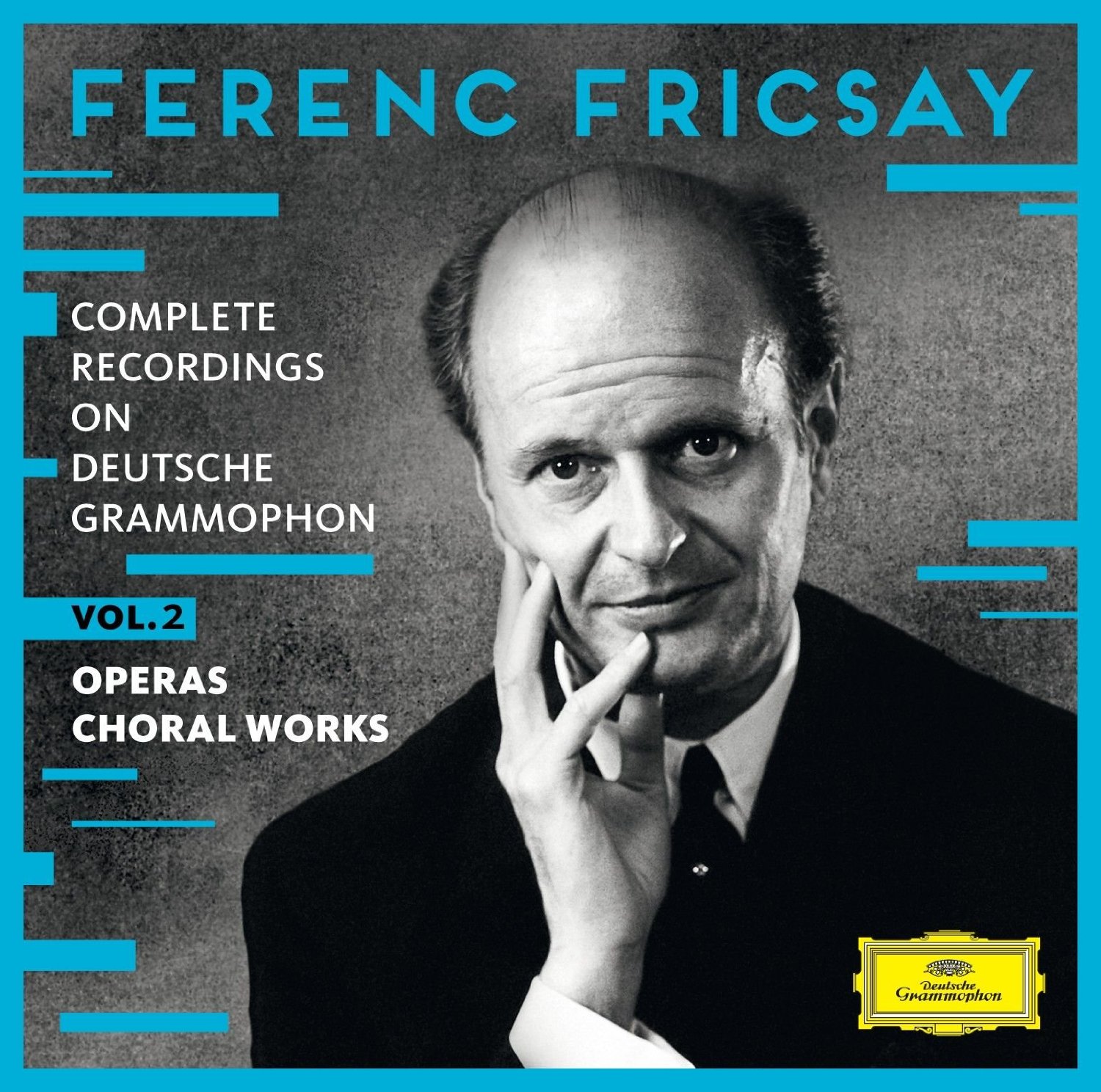
Tracklist

1CD: Bartók: Herzog Blaubarts Burg / Cantata profana
2CD: Beethoven: Fidelio(1)
3CD: Beethoven: Fidelio(2)
4CD: Bizet: Carmen
5CD: Gluck: Orpheus und Eurydike(1)
6CD: Gluck: Orpheus und Eurydike(2)
7CD: Haydn: The Seasons(1)
8CD: Haydn: The Seasons(2)
9CD: Haydn: The Seasons(3)
10CD: Haydn: The Seasons(4) / Haydn: Te Deum
11CD: Kodály: Psalmus Hungaricus
12CD: Mendelssohn: A Midsummer Night's Dream
13CD: Mozart: Great Mass in C minor / Laudate omnes gentes / Exsultate, jubilate
14CD: Mozart: Requiem
15CD: Mozart: Die Entführung aus dem Serail(1)
16CD: Mozart: Die Entführung aus dem Serail(2) / Exsultate, jubilate / Arias
17CD: Mozart: The Magic Flute(1)
18CD: Mozart: The Magic Flute(2)
19CD: Mozart: Don Giovanni(1)
20CD: Mozart: Don Giovanni(2)
21CD: Mozart: Don Giovanni(3)
22CD: Mozart: Idomeneo(1)
23CD: Mozart: Idomeneo(2)
24CD: Mozart: Le nozze di Figaro(1)
25CD: Mozart: Le nozze di Figaro(2)
26CD: Mozart: Le nozze di Figaro(3)
27CD: Rossini: Stabat Mater
28CD: J. Strauss II: Die Fledermaus(1)
29CD: J. Strauss II: Die Fledermaus(2) / Voices of Spring
30CD: Igor Stravinsky: Oedipus Rex / Symphony of Psalms
31CD: Verdi: Requiem(1)
32CD: Verdi: Requiem(2)
33CD: Verdi: Requiem(3) / Quattro pezzi sacri
34CD: Wagner: Der fliegende Holländer(1)
#TitleArtistRatingLength
1Der fliegende Holländer: Ouvertüre
executive producer:
Prof. Elsa Schiller (Deutsche Grammophon's head of production 1952-1965)
producer:
Wolfgang Lohse
orchestra:
RIAS-Symphonie-Orchester Berlin (aka RIAS‐Symphonie‐Orchester, 1946–1956 / Radio‐Symphonie‐Orchester Berlin, 1956–1993) (in 1952-10)
conductor:
Ferenc Fricsay (conductor) (in 1952-10)
balance engineer:
Heinrich Keilholz (in 1952-10) and Alfred Steinke (in 1952-10)
recorded at:
Jesus‐Christus‐Kirche (Dahlem) in Berlin, Germany (in 1952-10)
recording of:
Der fliegende Holländer, WWV 63: Ouvertüre (The Flying Dutchman: Overture) (in 1952-10)
composer:
Richard Wagner (composer) (from 1840 until 1841)
part of:
Der fliegende Holländer, WWV 63 (The Flying Dutchman)
Richard Wagner10:08
2Der fliegende Holländer: Erster Aufzug. »Hojohe! Halloho!« (Chor, Daland, Steuermann)
executive producer:
Prof. Elsa Schiller (Deutsche Grammophon's head of production 1952-1965)
producer:
Wolfgang Lohse
bass vocals [Daland, ein norwegischer Seefahrer]:
Josef Greindl (operatic bass) (in 1952-10)
choir vocals:
RIAS-Kammerchor (German chamber choir) (in 1952-10)
tenor vocals [Der Steuermann Dalands] and tenor vocals [Steuermann]:
Ernst Haefliger (tenor) (in 1952-10)
orchestra:
RIAS-Symphonie-Orchester Berlin (aka RIAS‐Symphonie‐Orchester, 1946–1956 / Radio‐Symphonie‐Orchester Berlin, 1956–1993) (in 1952-10)
conductor:
Ferenc Fricsay (conductor) (in 1952-10)
balance engineer:
Heinrich Keilholz (in 1952-10) and Alfred Steinke (in 1952-10)
recorded at:
Jesus‐Christus‐Kirche (Dahlem) in Berlin, Germany (in 1952-10)
partial recording of:
Der fliegende Holländer, WWV 63: Akt I, Nr. 1. Introduction "Hojohe! Hallojo!" (in 1952-10)
composer:
Richard Wagner (composer) (from 1840 until 1841)
librettist:
Richard Wagner (composer)
part of:
Der fliegende Holländer, WWV 63: Akt I
Richard Wagner1:29
3Der fliegende Holländer: Erster Aufzug. »Kein Zweifel! Sieben Meilen fort« (Daland, Steuermann)
executive producer:
Prof. Elsa Schiller (Deutsche Grammophon's head of production 1952-1965)
producer:
Wolfgang Lohse
bass vocals [Daland, ein norwegischer Seefahrer]:
Josef Greindl (operatic bass) (in 1952-10)
tenor vocals [Der Steuermann Dalands] and tenor vocals [Steuermann]:
Ernst Haefliger (tenor) (in 1952-10)
orchestra:
RIAS-Symphonie-Orchester Berlin (aka RIAS‐Symphonie‐Orchester, 1946–1956 / Radio‐Symphonie‐Orchester Berlin, 1956–1993) (in 1952-10)
conductor:
Ferenc Fricsay (conductor) (in 1952-10)
balance engineer:
Heinrich Keilholz (in 1952-10) and Alfred Steinke (in 1952-10)
recorded at:
Jesus‐Christus‐Kirche (Dahlem) in Berlin, Germany (in 1952-10)
partial recording of:
Der fliegende Holländer, WWV 63: Akt I, Nr. 1. Introduction "Hojohe! Hallojo!" (in 1952-10)
composer:
Richard Wagner (composer) (from 1840 until 1841)
librettist:
Richard Wagner (composer)
part of:
Der fliegende Holländer, WWV 63: Akt I
Richard Wagner3:31
4Der fliegende Holländer: Erster Aufzug. »Mit Gewitter und Sturm« (Steuermann)
executive producer:
Prof. Elsa Schiller (Deutsche Grammophon's head of production 1952-1965)
producer:
Wolfgang Lohse
tenor vocals [Der Steuermann Dalands] and tenor vocals [Steuermann]:
Ernst Haefliger (tenor) (in 1952-10)
orchestra:
RIAS-Symphonie-Orchester Berlin (aka RIAS‐Symphonie‐Orchester, 1946–1956 / Radio‐Symphonie‐Orchester Berlin, 1956–1993) (in 1952-10)
conductor:
Ferenc Fricsay (conductor) (in 1952-10)
balance engineer:
Heinrich Keilholz (in 1952-10) and Alfred Steinke (in 1952-10)
recorded at:
Jesus‐Christus‐Kirche (Dahlem) in Berlin, Germany (in 1952-10)
partial recording of:
Der fliegende Holländer, WWV 63: Akt I, Nr. 1. Introduction "Hojohe! Hallojo!" (in 1952-10)
composer:
Richard Wagner (composer) (from 1840 until 1841)
librettist:
Richard Wagner (composer)
part of:
Der fliegende Holländer, WWV 63: Akt I
Richard Wagner4:27
5Der fliegende Holländer: Erster Aufzug. »Die Frist ist um« (Holländer, Chor)
executive producer:
Prof. Elsa Schiller (Deutsche Grammophon's head of production 1952-1965)
producer:
Wolfgang Lohse
baritone vocals [Holländer] and bass-baritone vocals [Der Höllander]:
Josef Metternich (baritone) (in 1952-10)
choir vocals:
RIAS-Kammerchor (German chamber choir) (in 1952-10)
orchestra:
RIAS-Symphonie-Orchester Berlin (aka RIAS‐Symphonie‐Orchester, 1946–1956 / Radio‐Symphonie‐Orchester Berlin, 1956–1993) (in 1952-10)
conductor:
Ferenc Fricsay (conductor) (in 1952-10)
balance engineer:
Heinrich Keilholz (in 1952-10) and Alfred Steinke (in 1952-10)
recorded at:
Jesus‐Christus‐Kirche (Dahlem) in Berlin, Germany (in 1952-10)
compilation of:
Die Frist ist um by Ferenc Fricsay (conductor), Josef Greindl (operatic bass), Annelies Kupper (soprano), Wolfgang Windgassen (tenor), Josef Metternich (baritone) & Ernst Haefliger (tenor) and Dich frage ich, gepriesener Engel Gottes by Ferenc Fricsay (conductor), Josef Greindl (operatic bass), Annelies Kupper (soprano), Wolfgang Windgassen (tenor), Josef Metternich (baritone) & Ernst Haefliger (tenor)
recording of:
Der fliegende Holländer, WWV 63: Akt I, Nr. 2. Arie "Die Frist ist um" (in 1952-10)
composer:
Richard Wagner (composer) (from 1840 until 1841)
librettist:
Richard Wagner (composer)
part of:
Der fliegende Holländer, WWV 63: Akt I
Richard Wagner10:17
6Der fliegende Holländer: Erster Aufzug. »He! Holla! Steuermann!« (Daland, Steuermann, Holländer)
executive producer:
Prof. Elsa Schiller (Deutsche Grammophon's head of production 1952-1965)
producer:
Wolfgang Lohse
bass vocals [Daland, ein norwegischer Seefahrer]:
Josef Greindl (operatic bass) (in 1952-10)
bass-baritone vocals [Der Höllander]:
Josef Metternich (baritone) (in 1952-10)
tenor vocals [Der Steuermann Dalands]:
Ernst Haefliger (tenor) (in 1952-10)
orchestra:
RIAS-Symphonie-Orchester Berlin (aka RIAS‐Symphonie‐Orchester, 1946–1956 / Radio‐Symphonie‐Orchester Berlin, 1956–1993) (in 1952-10)
conductor:
Ferenc Fricsay (conductor) (in 1952-10)
balance engineer:
Heinrich Keilholz (in 1952-10) and Alfred Steinke (in 1952-10)
recorded at:
Jesus‐Christus‐Kirche (Dahlem) in Berlin, Germany (in 1952-10)
partial recording of:
Der fliegende Holländer, WWV 63: Akt I, Nr. 3. Scene, Duett und Chor "He! Holla! Steuermann!" (in 1952-10)
composer:
Richard Wagner (composer) (from 1840 until 1841)
librettist:
Richard Wagner (composer)
part of:
Der fliegende Holländer, WWV 63: Akt I
Richard Wagner3:49
7Der fliegende Holländer: Erster Aufzug. »Durch Sturm und bösen Wind verschlagen« (Holländer, Daland)
executive producer:
Prof. Elsa Schiller (Deutsche Grammophon's head of production 1952-1965)
producer:
Wolfgang Lohse
bass vocals [Daland, ein norwegischer Seefahrer]:
Josef Greindl (operatic bass) (in 1952-10)
bass-baritone vocals [Der Höllander]:
Josef Metternich (baritone) (in 1952-10)
orchestra:
RIAS-Symphonie-Orchester Berlin (aka RIAS‐Symphonie‐Orchester, 1946–1956 / Radio‐Symphonie‐Orchester Berlin, 1956–1993) (in 1952-10)
conductor:
Ferenc Fricsay (conductor) (in 1952-10)
balance engineer:
Heinrich Keilholz (in 1952-10) and Alfred Steinke (in 1952-10)
recorded at:
Jesus‐Christus‐Kirche (Dahlem) in Berlin, Germany (in 1952-10)
compilation of:
Durch Sturm und bösen Wind verschlagen by Ferenc Fricsay (conductor), Josef Greindl (operatic bass), Annelies Kupper (soprano), Wolfgang Windgassen (tenor), Josef Metternich (baritone) & Ernst Haefliger (tenor) and Wie? Hört ich recht? Meine Tochter sein Weib? by Ferenc Fricsay (conductor), Josef Greindl (operatic bass), Annelies Kupper (soprano), Wolfgang Windgassen (tenor), Josef Metternich (baritone) & Ernst Haefliger (tenor)
partial recording of:
Der fliegende Holländer, WWV 63: Akt I, Nr. 3. Scene, Duett und Chor "He! Holla! Steuermann!" (in 1952-10)
composer:
Richard Wagner (composer) (from 1840 until 1841)
librettist:
Richard Wagner (composer)
part of:
Der fliegende Holländer, WWV 63: Akt I
Richard Wagner11:03
8Der fliegende Holländer: Erster Aufzug. »Südwind! Südwind!« (Steurmann, Chor, Daland, Holländer)
executive producer:
Prof. Elsa Schiller (Deutsche Grammophon's head of production 1952-1965)
producer:
Wolfgang Lohse
bass vocals [Daland, ein norwegischer Seefahrer]:
Josef Greindl (operatic bass) (in 1952-10)
bass-baritone vocals [Der Höllander]:
Josef Metternich (baritone) (in 1952-10)
choir vocals:
RIAS-Kammerchor (German chamber choir) (in 1952-10)
tenor vocals [Der Steuermann Dalands]:
Ernst Haefliger (tenor) (in 1952-10)
orchestra:
RIAS-Symphonie-Orchester Berlin (aka RIAS‐Symphonie‐Orchester, 1946–1956 / Radio‐Symphonie‐Orchester Berlin, 1956–1993) (in 1952-10)
conductor:
Ferenc Fricsay (conductor) (in 1952-10)
balance engineer:
Heinrich Keilholz (in 1952-10) and Alfred Steinke (in 1952-10)
recorded at:
Jesus‐Christus‐Kirche (Dahlem) in Berlin, Germany (in 1952-10)
partial recording of:
Der fliegende Holländer, WWV 63: Akt I, Nr. 3. Scene, Duett und Chor "He! Holla! Steuermann!" (in 1952-10)
composer:
Richard Wagner (composer) (from 1840 until 1841)
librettist:
Richard Wagner (composer)
part of:
Der fliegende Holländer, WWV 63: Akt I
Richard Wagner1:51
9Der fliegende Holländer: Erster Aufzug. »Mit Gewitter und Sturm« (Chor)
executive producer:
Prof. Elsa Schiller (Deutsche Grammophon's head of production 1952-1965)
producer:
Wolfgang Lohse
choir vocals:
RIAS-Kammerchor (German chamber choir) (in 1952-10)
orchestra:
RIAS-Symphonie-Orchester Berlin (aka RIAS‐Symphonie‐Orchester, 1946–1956 / Radio‐Symphonie‐Orchester Berlin, 1956–1993) (in 1952-10)
conductor:
Ferenc Fricsay (conductor) (in 1952-10)
balance engineer:
Heinrich Keilholz (in 1952-10) and Alfred Steinke (in 1952-10)
recorded at:
Jesus‐Christus‐Kirche (Dahlem) in Berlin, Germany (in 1952-10)
partial recording of:
Der fliegende Holländer, WWV 63: Akt I, Nr. 3. Scene, Duett und Chor "He! Holla! Steuermann!" (in 1952-10)
composer:
Richard Wagner (composer) (from 1840 until 1841)
librettist:
Richard Wagner (composer)
part of:
Der fliegende Holländer, WWV 63: Akt I
Richard Wagner1:31
10Der fliegende Holländer: Zweiter Aufzug. Vorspiel
executive producer:
Prof. Elsa Schiller (Deutsche Grammophon's head of production 1952-1965)
producer:
Wolfgang Lohse
orchestra:
RIAS-Symphonie-Orchester Berlin (aka RIAS‐Symphonie‐Orchester, 1946–1956 / Radio‐Symphonie‐Orchester Berlin, 1956–1993) (in 1952-10)
conductor:
Ferenc Fricsay (conductor) (in 1952-10)
balance engineer:
Heinrich Keilholz (in 1952-10) and Alfred Steinke (in 1952-10)
recorded at:
Jesus‐Christus‐Kirche (Dahlem) in Berlin, Germany (in 1952-10)
recording of:
Der fliegende Holländer, WWV 63: Act II. Introduktion (in 1952-10)
composer and librettist:
Richard Wagner (composer)
part of:
Der fliegende Holländer, WWV 63: Akt II
Richard Wagner1:42
11Der fliegende Holländer: Zweiter Aufzug. »Summ und brumm, du gutes Rädchen« (Chor, Mary, Senta)
executive producer:
Prof. Elsa Schiller (Deutsche Grammophon's head of production 1952-1965)
producer:
Wolfgang Lohse
choir vocals:
RIAS-Kammerchor (German chamber choir) (in 1952-10)
contralto vocals [Mary, Sentas Amme]:
Sieglinde Wagner (contralto) (in 1952-10)
soprano vocals [Senta, seine Tochter]:
Annelies Kupper (soprano) (in 1952-10)
orchestra:
RIAS-Symphonie-Orchester Berlin (aka RIAS‐Symphonie‐Orchester, 1946–1956 / Radio‐Symphonie‐Orchester Berlin, 1956–1993) (in 1952-10)
conductor:
Ferenc Fricsay (conductor) (in 1952-10)
balance engineer:
Heinrich Keilholz (in 1952-10) and Alfred Steinke (in 1952-10)
recorded at:
Jesus‐Christus‐Kirche (Dahlem) in Berlin, Germany (in 1952-10)
partial recording of:
Der fliegende Holländer, WWV 63: Akt II, Nr. 4. Lied, Scene, Ballade und Chor "Summ und brumm, du gutes Rädchen" … "Jo ho hoe, traft ihr das Schiff" (Chor der Spinnerinnen & Sentas Ballade) (in 1952-10)
composer:
Richard Wagner (composer) (from 1840 until 1841)
librettist:
Richard Wagner (composer)
part of:
Der fliegende Holländer, WWV 63: Akt II
part of:
Der fliegende Holländer, WWV 63: Akt II
Richard Wagner8:01
12Der fliegende Holländer: Zweiter Aufzug. »Johohoe! Traft ihr das Schiff im Meere an« (Senta, Chor)
executive producer:
Prof. Elsa Schiller (Deutsche Grammophon's head of production 1952-1965)
producer:
Wolfgang Lohse
choir vocals:
RIAS-Kammerchor (German chamber choir) (in 1952-10)
soprano vocals [Senta, seine Tochter]:
Annelies Kupper (soprano) (in 1952-10)
orchestra:
RIAS-Symphonie-Orchester Berlin (aka RIAS‐Symphonie‐Orchester, 1946–1956 / Radio‐Symphonie‐Orchester Berlin, 1956–1993) (in 1952-10)
conductor:
Ferenc Fricsay (conductor) (in 1952-10)
balance engineer:
Heinrich Keilholz (in 1952-10) and Alfred Steinke (in 1952-10)
recorded at:
Jesus‐Christus‐Kirche (Dahlem) in Berlin, Germany (in 1952-10)
partial recording of:
Der fliegende Holländer, WWV 63: Akt II, Nr. 4. Lied, Scene, Ballade und Chor "Summ und brumm, du gutes Rädchen" … "Jo ho hoe, traft ihr das Schiff" (Chor der Spinnerinnen & Sentas Ballade) (in 1952-10)
composer:
Richard Wagner (composer) (from 1840 until 1841)
librettist:
Richard Wagner (composer)
part of:
Der fliegende Holländer, WWV 63: Akt II
part of:
Der fliegende Holländer, WWV 63: Akt II
Richard Wagner6:44
13Der fliegende Holländer: Zweiter Aufzug. »Hilf Himmel! Senta!« (Erik, Chor, Mary, Senta)
executive producer:
Prof. Elsa Schiller (Deutsche Grammophon's head of production 1952-1965)
producer:
Wolfgang Lohse
contralto vocals [Mary, Sentas Amme]:
Sieglinde Wagner (contralto) (in 1952-10)
soprano vocals [Senta, seine Tochter]:
Annelies Kupper (soprano) (in 1952-10)
tenor vocals [Erik, ein Jäger]:
Wolfgang Windgassen (tenor) (in 1952-10)
orchestra:
RIAS-Symphonie-Orchester Berlin (aka RIAS‐Symphonie‐Orchester, 1946–1956 / Radio‐Symphonie‐Orchester Berlin, 1956–1993) (in 1952-10)
conductor:
Ferenc Fricsay (conductor) (in 1952-10)
balance engineer:
Heinrich Keilholz (in 1952-10) and Alfred Steinke (in 1952-10)
recorded at:
Jesus‐Christus‐Kirche (Dahlem) in Berlin, Germany (in 1952-10)
partial recording of:
Der fliegende Holländer, WWV 63: Akt II, Nr. 4. Lied, Scene, Ballade und Chor "Summ und brumm, du gutes Rädchen" … "Jo ho hoe, traft ihr das Schiff" (Chor der Spinnerinnen & Sentas Ballade) (in 1952-10)
composer:
Richard Wagner (composer) (from 1840 until 1841)
librettist:
Richard Wagner (composer)
part of:
Der fliegende Holländer, WWV 63: Akt II
part of:
Der fliegende Holländer, WWV 63: Akt II
Richard Wagner2:10
14Der fliegende Holländer: Zweiter Aufzug. »Bleib, Senta! Bleib nur einen Augenblick!« (Erik, Senta)
executive producer:
Prof. Elsa Schiller (Deutsche Grammophon's head of production 1952-1965)
producer:
Wolfgang Lohse
soprano vocals [Senta, seine Tochter]:
Annelies Kupper (soprano) (in 1952-10)
tenor vocals [Erik, ein Jäger]:
Wolfgang Windgassen (tenor) (in 1952-10)
orchestra:
RIAS-Symphonie-Orchester Berlin (aka RIAS‐Symphonie‐Orchester, 1946–1956 / Radio‐Symphonie‐Orchester Berlin, 1956–1993) (in 1952-10)
conductor:
Ferenc Fricsay (conductor) (in 1952-10)
balance engineer:
Heinrich Keilholz (in 1952-10) and Alfred Steinke (in 1952-10)
recorded at:
Jesus‐Christus‐Kirche (Dahlem) in Berlin, Germany (in 1952-10)
partial recording of:
Der fliegende Holländer, WWV 63: Akt II, Nr. 5. Duett "Bleib, Senta! Bleib nur einen Augenblick!" (in 1952-10)
composer:
Richard Wagner (composer) (from 1840 until 1841)
librettist:
Richard Wagner (composer)
part of:
Der fliegende Holländer, WWV 63: Akt II
Richard Wagner0:38
15Der fliegende Holländer: Zweiter Aufzug. »Mein Herz voll Treue bis zum Sterben« (Erik, Senta)
executive producer:
Prof. Elsa Schiller (Deutsche Grammophon's head of production 1952-1965)
producer:
Wolfgang Lohse
soprano vocals [Senta, seine Tochter]:
Annelies Kupper (soprano) (in 1952-10)
tenor vocals [Erik, ein Jäger]:
Wolfgang Windgassen (tenor) (in 1952-10)
orchestra:
RIAS-Symphonie-Orchester Berlin (aka RIAS‐Symphonie‐Orchester, 1946–1956 / Radio‐Symphonie‐Orchester Berlin, 1956–1993) (in 1952-10)
conductor:
Ferenc Fricsay (conductor) (in 1952-10)
balance engineer:
Heinrich Keilholz (in 1952-10) and Alfred Steinke (in 1952-10)
recorded at:
Jesus‐Christus‐Kirche (Dahlem) in Berlin, Germany (in 1952-10)
partial recording of:
Der fliegende Holländer, WWV 63: Akt II, Nr. 5. Duett "Bleib, Senta! Bleib nur einen Augenblick!" (in 1952-10)
composer:
Richard Wagner (composer) (from 1840 until 1841)
librettist:
Richard Wagner (composer)
part of:
Der fliegende Holländer, WWV 63: Akt II
Richard Wagner5:18
35CD: Wagner: Der fliegende Holländer(2)
36CD: Bizet, Gounod, Verdi...:Opera Arias / Orff: Carmina Burana(excerpts)
37CD: Interviews with Ferenc Fricsay
38DVD-Video: Dukas: The Sorcerer's Apprentice / Kodály: Háry János Suite

Credits

Release

manufactured in:EU (Europe)
photography:Erich Auerbach (photographer) (task: box photo left side © Erich Auerbach)
Hugo Jehle (photographer) (task: box photo right side © Hugo Jehle)
Legrand (photo studio) (task: box cover photo © Legrand)
phonographic copyright (℗) by:Deutsche Grammophon GmbH (this is the company; for release labels, use “Deutsche Grammophon”) (in 2015)
Discogs:https://www.discogs.com/release/11744322 [info]
ASIN:UK: B00W6ET93W [info]
discography entry:http://www.deutschegrammophon.com/en/cat/4794641 [info]