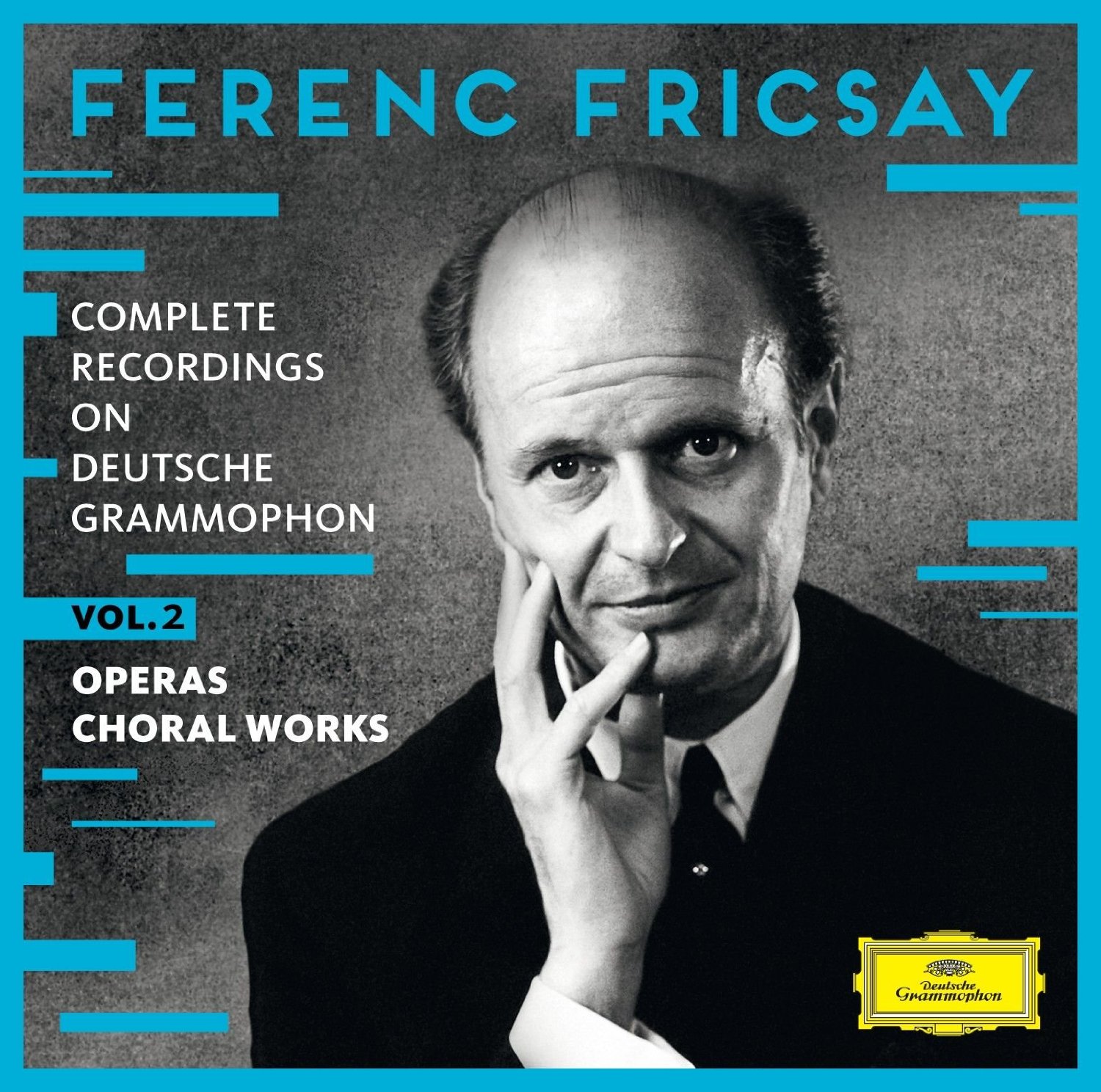
Tracklist

1CD: Bartók: Herzog Blaubarts Burg / Cantata profana
2CD: Beethoven: Fidelio(1)
3CD: Beethoven: Fidelio(2)
4CD: Bizet: Carmen
5CD: Gluck: Orpheus und Eurydike(1)
6CD: Gluck: Orpheus und Eurydike(2)
7CD: Haydn: The Seasons(1)
8CD: Haydn: The Seasons(2)
9CD: Haydn: The Seasons(3)
10CD: Haydn: The Seasons(4) / Haydn: Te Deum
11CD: Kodály: Psalmus Hungaricus
12CD: Mendelssohn: A Midsummer Night's Dream
13CD: Mozart: Great Mass in C minor / Laudate omnes gentes / Exsultate, jubilate
14CD: Mozart: Requiem
15CD: Mozart: Die Entführung aus dem Serail(1)
16CD: Mozart: Die Entführung aus dem Serail(2) / Exsultate, jubilate / Arias
17CD: Mozart: The Magic Flute(1)
18CD: Mozart: The Magic Flute(2)
19CD: Mozart: Don Giovanni(1)
20CD: Mozart: Don Giovanni(2)
21CD: Mozart: Don Giovanni(3)
#TitleArtistRatingLength
1Don Giovanni, K. 527: Atto secondo. Recitativo: "Di molte faci il lume" (Leporello, Donna Elvira)
executive producer:
Prof. Elsa Schiller (Deutsche Grammophon's head of production 1952-1965)
producer:
Otto Gerdes (conductor and producer)
editor:
Günter Hermanns (producer/engineer)
bass vocals [Leporello]:
Karl Christian Kohn (operatic bass) (from 1958-09 until 1958-10)
soprano vocals [Donna Elvira]:
Maria Stader (soprano) (from 1958-09 until 1958-10)
orchestra:
Radio-Symphonie-Orchester Berlin (aka RIAS‐Symphonie‐Orchester, 1946–1956 / Radio‐Symphonie‐Orchester Berlin, 1956–1993) (from 1958-09 until 1958-10)
conductor:
Ferenc Fricsay (conductor) (from 1958-09 until 1958-10)
balance engineer:
Werner Wolf (engineer/producer) (from 1958-09 until 1958-10)
phonographic copyright (℗) by:
Deutsche Grammophon GmbH (this is the company; for release labels, use “Deutsche Grammophon”) (in 1959)
recorded at:
Jesus‐Christus‐Kirche (Dahlem) in Berlin, Germany (from 1958-09 until 1958-10)
recording of:
Don Giovanni: Atto II. Recitativo “Di molte faci il lume” (Leporello, Donna Elvira) (from 1958-09 until 1958-10)
composer:
Wolfgang Amadeus Mozart (classical composer)
librettist:
Lorenzo Da Ponte (in 1787)
part of:
Don Giovanni: Atto II
Wolfgang Amadeus Mozart0:26
2Don Giovanni, K. 527: Atto secondo, N. 19. Sestetto: "Sola, sola, in buio loco" (Donna Elvira, Leporello, Don Ottavio, Donna Anna, Zerlina, Masetto)
executive producer:
Prof. Elsa Schiller (Deutsche Grammophon's head of production 1952-1965)
producer:
Otto Gerdes (conductor and producer)
editor:
Günter Hermanns (producer/engineer)
bass vocals [Leporello]:
Karl Christian Kohn (operatic bass) (from 1958-09 until 1958-10)
bass vocals [Masetto]:
Ivan Sardi (operatic bass) (from 1958-09 until 1958-10)
soprano vocals [Donna Anna]:
Sena Jurinac (soprano) (from 1958-09 until 1958-10)
soprano vocals [Donna Elvira]:
Maria Stader (soprano) (from 1958-09 until 1958-10)
soprano vocals [Zerlina]:
Irmgard Seefried (soprano) (from 1958-09 until 1958-10)
tenor vocals [Don Ottavio]:
Ernst Haefliger (tenor) (from 1958-09 until 1958-10)
orchestra:
Radio-Symphonie-Orchester Berlin (aka RIAS‐Symphonie‐Orchester, 1946–1956 / Radio‐Symphonie‐Orchester Berlin, 1956–1993) (from 1958-09 until 1958-10)
conductor:
Ferenc Fricsay (conductor) (from 1958-09 until 1958-10)
balance engineer:
Werner Wolf (engineer/producer) (from 1958-09 until 1958-10)
phonographic copyright (℗) by:
Deutsche Grammophon GmbH (this is the company; for release labels, use “Deutsche Grammophon”) (in 1959)
recorded at:
Jesus‐Christus‐Kirche (Dahlem) in Berlin, Germany (from 1958-09 until 1958-10)
recording of:
Don Giovanni: Atto II. No. 19 Sestetto “Sola sola in buio loco” (Donna Elvira, Leporello, Don Ottavio, Donna Anna) (from 1958-09 until 1958-10)
composer:
Wolfgang Amadeus Mozart (classical composer)
librettist:
Lorenzo Da Ponte (in 1787)
part of:
Don Giovanni: Atto II
Wolfgang Amadeus Mozart7:31
3Don Giovanni, K. 527: Atto secondo. Recitativo: "Dunque quello sei tu" (Zerlina, Donna Elvira, Don Ottavio, Masetto)
executive producer:
Prof. Elsa Schiller (Deutsche Grammophon's head of production 1952-1965)
producer:
Otto Gerdes (conductor and producer)
editor:
Günter Hermanns (producer/engineer)
bass vocals [Masetto]:
Ivan Sardi (operatic bass) (from 1958-09 until 1958-10)
soprano vocals [Donna Elvira]:
Maria Stader (soprano) (from 1958-09 until 1958-10)
soprano vocals [Zerlina]:
Irmgard Seefried (soprano) (in 1958-09)
tenor vocals [Don Ottavio]:
Ernst Haefliger (tenor) (from 1958-09 until 1958-10)
orchestra:
Radio-Symphonie-Orchester Berlin (aka RIAS‐Symphonie‐Orchester, 1946–1956 / Radio‐Symphonie‐Orchester Berlin, 1956–1993) (from 1958-09 until 1958-10)
conductor:
Ferenc Fricsay (conductor) (from 1958-09 until 1958-10)
balance engineer:
Werner Wolf (engineer/producer) (from 1958-09 until 1958-10)
phonographic copyright (℗) by:
Deutsche Grammophon GmbH (this is the company; for release labels, use “Deutsche Grammophon”) (in 1959)
recorded at:
Jesus‐Christus‐Kirche (Dahlem) in Berlin, Germany (from 1958-09 until 1958-10)
recording of:
Don Giovanni: Atto II. Recitativo “Dunque quello sei tu” (Zerlina, Donna Elvira, Don Ottavio, Masetto) (from 1958-09 until 1958-10)
composer:
Wolfgang Amadeus Mozart (classical composer)
part of:
Don Giovanni: Atto II
Wolfgang Amadeus Mozart0:22
4Don Giovanni, K. 527: Atto secondo, N. 20. Aria: "Ah! pietà, signori miei!" (Leporello)
executive producer:
Prof. Elsa Schiller (Deutsche Grammophon's head of production 1952-1965)
producer:
Otto Gerdes (conductor and producer)
editor:
Günter Hermanns (producer/engineer)
bass vocals and bass vocals [Leporello]:
Karl Christian Kohn (operatic bass) (from 1958-09 until 1958-10)
orchestra:
Radio-Symphonie-Orchester Berlin (aka RIAS‐Symphonie‐Orchester, 1946–1956 / Radio‐Symphonie‐Orchester Berlin, 1956–1993) (from 1958-09 until 1958-10)
conductor:
Ferenc Fricsay (conductor) (from 1958-09 until 1958-10)
balance engineer:
Werner Wolf (engineer/producer) (from 1958-09 until 1958-10)
phonographic copyright (℗) by:
Deutsche Grammophon GmbH (this is the company; for release labels, use “Deutsche Grammophon”) (in 1959)
recorded at:
Jesus‐Christus‐Kirche (Dahlem) in Berlin, Germany (from 1958-09 until 1958-10)
recording of:
Don Giovanni: Atto II. No. 20 Aria “Ah pietà, signori miei” (Leporello) (from 1958-09 until 1958-10)
composer:
Wolfgang Amadeus Mozart (classical composer)
librettist:
Lorenzo Da Ponte
part of:
Don Giovanni: Atto II
Wolfgang Amadeus Mozart1:44
5Don Giovanni, K. 527: Atto secondo. Recitativo: "Ferma, perfido, ferma" (Donna Elvira, Masetto, Zerlina, Don Ottavio)
executive producer:
Prof. Elsa Schiller (Deutsche Grammophon's head of production 1952-1965)
producer:
Otto Gerdes (conductor and producer)
editor:
Günter Hermanns (producer/engineer)
bass vocals [Masetto]:
Ivan Sardi (operatic bass) (from 1958-09 until 1958-10)
soprano vocals [Donna Elvira]:
Maria Stader (soprano) (from 1958-09 until 1958-10)
soprano vocals [Zerlina]:
Irmgard Seefried (soprano) (from 1958-09 until 1958-10)
tenor vocals [Don Ottavio]:
Ernst Haefliger (tenor) (from 1958-09 until 1958-10)
orchestra:
Radio-Symphonie-Orchester Berlin (aka RIAS‐Symphonie‐Orchester, 1946–1956 / Radio‐Symphonie‐Orchester Berlin, 1956–1993) (from 1958-09 until 1958-10)
conductor:
Ferenc Fricsay (conductor) (from 1958-09 until 1958-10)
balance engineer:
Werner Wolf (engineer/producer) (from 1958-09 until 1958-10)
phonographic copyright (℗) by:
Deutsche Grammophon GmbH (this is the company; for release labels, use “Deutsche Grammophon”) (in 1959)
recorded at:
Jesus‐Christus‐Kirche (Dahlem) in Berlin, Germany (from 1958-09 until 1958-10)
recording of:
Don Giovanni: Atto II. Recitativo “Ferma, perfido, ferma” (Donna Elvira, Masetto, Zerlina, Don Ottavio) (from 1958-09 until 1958-10)
composer:
Wolfgang Amadeus Mozart (classical composer)
librettist:
Lorenzo Da Ponte
part of:
Don Giovanni: Atto II
Wolfgang Amadeus Mozart0:48
6Don Giovanni, K. 527: Atto secondo, N. 21a. Aria: "Il mio tesoro intanto" (Don Ottavio)
executive producer:
Prof. Elsa Schiller (Deutsche Grammophon's head of production 1952-1965)
producer:
Otto Gerdes (conductor and producer)
editor:
Günter Hermanns (producer/engineer)
tenor vocals [Don Ottavio]:
Ernst Haefliger (tenor) (from 1958-09 until 1958-10)
orchestra:
Radio-Symphonie-Orchester Berlin (aka RIAS‐Symphonie‐Orchester, 1946–1956 / Radio‐Symphonie‐Orchester Berlin, 1956–1993) (from 1958-09 until 1958-10)
conductor:
Ferenc Fricsay (conductor) (from 1958-09 until 1958-10)
balance engineer:
Werner Wolf (engineer/producer) (from 1958-09 until 1958-10)
phonographic copyright (℗) by:
Deutsche Grammophon GmbH (this is the company; for release labels, use “Deutsche Grammophon”) (in 1959)
recorded at:
Jesus‐Christus‐Kirche (Dahlem) in Berlin, Germany (from 1958-09 until 1958-10)
recording of:
Don Giovanni: Atto II. No. 21 Aria “Il mio tesoro intanto” (Don Ottavio) (from 1958-09 until 1958-10)
composer:
Wolfgang Amadeus Mozart (classical composer)
librettist:
Lorenzo Da Ponte
part of:
Don Giovanni: Atto II
Wolfgang Amadeus Mozart4:20
7Don Giovanni, K. 527: Atto secondo, N. 21b. Recitativo accompagnato: "I quali eccessi, o numi" (Donna Elvira)
executive producer:
Prof. Elsa Schiller (Deutsche Grammophon's head of production 1952-1965)
producer:
Otto Gerdes (conductor and producer)
editor:
Günter Hermanns (producer/engineer)
soprano vocals [Donna Elvira]:
Maria Stader (soprano) (from 1958-09 until 1958-10)
orchestra:
Radio-Symphonie-Orchester Berlin (aka RIAS‐Symphonie‐Orchester, 1946–1956 / Radio‐Symphonie‐Orchester Berlin, 1956–1993) (from 1958-09 until 1958-10)
conductor:
Ferenc Fricsay (conductor) (from 1958-09 until 1958-10)
balance engineer:
Werner Wolf (engineer/producer) (from 1958-09 until 1958-10)
phonographic copyright (℗) by:
Deutsche Grammophon GmbH (this is the company; for release labels, use “Deutsche Grammophon”) (in 1959)
recorded at:
Jesus‐Christus‐Kirche (Dahlem) in Berlin, Germany (from 1958-09 until 1958-10)
recording of:
Don Giovanni: Atto II. Anhang. No. 21b Recitativo accompagnato “In quali eccessi, o Numi” (Donna Elvira) [540c/1] (from 1958-09 until 1958-10)
composer:
Wolfgang Amadeus Mozart (classical composer)
librettist:
Lorenzo Da Ponte
part of:
Don Giovanni: Atto II
part of:
Don Giovanni: Recitative and Aria, K. 540c
Wolfgang Amadeus Mozart2:12
8Don Giovanni, K. 527: Atto secondo. Aria: "Mi tradì quell'alma ingrata" (Donna Elvira)
executive producer:
Prof. Elsa Schiller (Deutsche Grammophon's head of production 1952-1965)
producer:
Otto Gerdes (conductor and producer)
editor:
Günter Hermanns (producer/engineer)
soprano vocals [Donna Elvira]:
Maria Stader (soprano) (from 1958-09 until 1958-10)
orchestra:
Radio-Symphonie-Orchester Berlin (aka RIAS‐Symphonie‐Orchester, 1946–1956 / Radio‐Symphonie‐Orchester Berlin, 1956–1993) (from 1958-09 until 1958-10)
conductor:
Ferenc Fricsay (conductor) (from 1958-09 until 1958-10)
balance engineer:
Werner Wolf (engineer/producer) (from 1958-09 until 1958-10)
phonographic copyright (℗) by:
Deutsche Grammophon GmbH (this is the company; for release labels, use “Deutsche Grammophon”) (in 1959)
recorded at:
Jesus‐Christus‐Kirche (Dahlem) in Berlin, Germany (from 1958-09 until 1958-10)
partial recording of:
Don Giovanni: Atto II. Anhang. No. 21b Aria “Mi tradi quell’alma ingrata” (Donna Elvira) [540c/2] (from 1958-09 until 1958-10)
composer:
Wolfgang Amadeus Mozart (classical composer)
librettist:
Lorenzo Da Ponte
part of:
Don Giovanni: Atto II
part of:
Don Giovanni: Recitative and Aria, K. 540c
Wolfgang Amadeus Mozart3:55
9Don Giovanni, K. 527: Atto secondo. Recitativo: "Ah! ah! ah! questa è buona!" (Don Giovanni, Leporello, Il commendatore)
executive producer:
Prof. Elsa Schiller (Deutsche Grammophon's head of production 1952-1965)
producer:
Otto Gerdes (conductor and producer)
editor:
Günter Hermanns (producer/engineer)
baritone vocals [Don Giovanni]:
Dietrich Fischer‐Dieskau (baritone) (from 1958-09 until 1958-10)
bass vocals [Il commendatore]:
Walter Kreppel (operatic bass) (from 1958-09 until 1958-10)
bass vocals [Leporello]:
Karl Christian Kohn (operatic bass) (from 1958-09 until 1958-10)
orchestra:
Radio-Symphonie-Orchester Berlin (aka RIAS‐Symphonie‐Orchester, 1946–1956 / Radio‐Symphonie‐Orchester Berlin, 1956–1993) (from 1958-09 until 1958-10)
conductor:
Ferenc Fricsay (conductor) (from 1958-09 until 1958-10)
balance engineer:
Werner Wolf (engineer/producer) (from 1958-09 until 1958-10)
phonographic copyright (℗) by:
Deutsche Grammophon GmbH (this is the company; for release labels, use “Deutsche Grammophon”) (in 1959)
recorded at:
Jesus‐Christus‐Kirche (Dahlem) in Berlin, Germany (from 1958-09 until 1958-10)
recording of:
Don Giovanni: Atto II. Recitativo “Ah, ah, ah, ah, questa è buona” (Don Giovanni, Leporello) (from 1958-09 until 1958-10)
composer:
Wolfgang Amadeus Mozart (classical composer)
librettist:
Lorenzo Da Ponte
part of:
Don Giovanni: Atto II
Wolfgang Amadeus Mozart3:48
10Don Giovanni, K. 527: Atto secondo, N. 22. Duetto: "O statua gentillissima" (Leporello, Don Giovanni, Il commendatore)
executive producer:
Prof. Elsa Schiller (Deutsche Grammophon's head of production 1952-1965)
producer:
Otto Gerdes (conductor and producer)
editor:
Günter Hermanns (producer/engineer)
baritone vocals [Don Giovanni]:
Dietrich Fischer‐Dieskau (baritone) (from 1958-09 until 1958-10)
bass vocals [Il commendatore]:
Walter Kreppel (operatic bass) (from 1958-09 until 1958-10)
bass vocals [Leporello]:
Karl Christian Kohn (operatic bass) (from 1958-09 until 1958-10)
orchestra:
Radio-Symphonie-Orchester Berlin (aka RIAS‐Symphonie‐Orchester, 1946–1956 / Radio‐Symphonie‐Orchester Berlin, 1956–1993) (from 1958-09 until 1958-10)
conductor:
Ferenc Fricsay (conductor) (from 1958-09 until 1958-10)
balance engineer:
Werner Wolf (engineer/producer) (from 1958-09 until 1958-10)
phonographic copyright (℗) by:
Deutsche Grammophon GmbH (this is the company; for release labels, use “Deutsche Grammophon”) (in 1959)
recorded at:
Jesus‐Christus‐Kirche (Dahlem) in Berlin, Germany (from 1958-09 until 1958-10)
recording of:
Don Giovanni: Atto II. No. 22 Duetto “O statua gentilissima” (Leporello, Don Giovanni) (from 1958-09 until 1958-10)
composer:
Wolfgang Amadeus Mozart (classical composer)
librettist:
Lorenzo Da Ponte
part of:
Don Giovanni: Atto II
Wolfgang Amadeus Mozart3:26
11Don Giovanni, K. 527: Atto secondo. Recitativo: "Calmatevi, idol mio" (Don Ottavio, Donna Anna)
executive producer:
Prof. Elsa Schiller (Deutsche Grammophon's head of production 1952-1965)
producer:
Otto Gerdes (conductor and producer)
editor:
Günter Hermanns (producer/engineer)
soprano vocals [Donna Anna]:
Sena Jurinac (soprano) (from 1958-09 until 1958-10)
tenor vocals [Don Ottavio]:
Ernst Haefliger (tenor) (from 1958-09 until 1958-10)
orchestra:
Radio-Symphonie-Orchester Berlin (aka RIAS‐Symphonie‐Orchester, 1946–1956 / Radio‐Symphonie‐Orchester Berlin, 1956–1993) (from 1958-09 until 1958-10)
conductor:
Ferenc Fricsay (conductor) (from 1958-09 until 1958-10)
balance engineer:
Werner Wolf (engineer/producer) (from 1958-09 until 1958-10)
phonographic copyright (℗) by:
Deutsche Grammophon GmbH (this is the company; for release labels, use “Deutsche Grammophon”) (in 1959)
recorded at:
Jesus‐Christus‐Kirche (Dahlem) in Berlin, Germany (from 1958-09 until 1958-10)
recording of:
Don Giovanni: Atto II. Recitativo “Calmatevi, idol mio” (Don Ottavio, Donna Anna) (from 1958-09 until 1958-10)
composer:
Wolfgang Amadeus Mozart (classical composer)
librettist:
Lorenzo Da Ponte
part of:
Don Giovanni: Atto II
Wolfgang Amadeus Mozart0:59
12Don Giovanni, K. 527: Atto secondo, N. 23. Recitativo accompagnato: "Crudele? ... Ah no! mio bene!" (Donna Anna)
executive producer:
Prof. Elsa Schiller (Deutsche Grammophon's head of production 1952-1965)
producer:
Otto Gerdes (conductor and producer)
editor:
Günter Hermanns (producer/engineer)
soprano vocals [Donna Anna]:
Sena Jurinac (soprano) (from 1958-09 until 1958-10)
orchestra:
Radio-Symphonie-Orchester Berlin (aka RIAS‐Symphonie‐Orchester, 1946–1956 / Radio‐Symphonie‐Orchester Berlin, 1956–1993) (from 1958-09 until 1958-10)
conductor:
Ferenc Fricsay (conductor) (from 1958-09 until 1958-10)
balance engineer:
Werner Wolf (engineer/producer) (from 1958-09 until 1958-10)
phonographic copyright (℗) by:
Deutsche Grammophon GmbH (this is the company; for release labels, use “Deutsche Grammophon”) (in 1959)
recorded at:
Jesus‐Christus‐Kirche (Dahlem) in Berlin, Germany (from 1958-09 until 1958-10)
recording of:
Don Giovanni: Atto II. No. 23 Recitativo accompagnato “Crudele! - Ah no, mio bene!” (Donna Anna) (from 1958-09 until 1958-10)
composer:
Wolfgang Amadeus Mozart (classical composer)
librettist:
Lorenzo Da Ponte
part of:
Don Giovanni: Atto II
part of:
Don Giovanni: Atto II
Wolfgang Amadeus Mozart1:54
13Don Giovanni, K. 527: Atto secondo. Rondo: "Non mi dir, bell'idol mio" (Donna Anna)
executive producer:
Prof. Elsa Schiller (Deutsche Grammophon's head of production 1952-1965)
producer:
Otto Gerdes (conductor and producer)
editor:
Günter Hermanns (producer/engineer)
soprano vocals [Donna Anna]:
Sena Jurinac (soprano) (from 1958-09 until 1958-10)
orchestra:
Radio-Symphonie-Orchester Berlin (aka RIAS‐Symphonie‐Orchester, 1946–1956 / Radio‐Symphonie‐Orchester Berlin, 1956–1993) (from 1958-09 until 1958-10)
conductor:
Ferenc Fricsay (conductor) (from 1958-09 until 1958-10)
balance engineer:
Werner Wolf (engineer/producer) (from 1958-09 until 1958-10)
phonographic copyright (℗) by:
Deutsche Grammophon GmbH (this is the company; for release labels, use “Deutsche Grammophon”) (in 1959)
recorded at:
Jesus‐Christus‐Kirche (Dahlem) in Berlin, Germany (from 1958-09 until 1958-10)
recording of:
Don Giovanni: Atto II. No. 23 Rondo “Non mi dir, bell’idol mio” (Donna Anna) (from 1958-09 until 1958-10)
composer:
Wolfgang Amadeus Mozart (classical composer)
librettist:
Lorenzo Da Ponte
part of:
Don Giovanni: Atto II
Wolfgang Amadeus Mozart5:36
14Don Giovanni, K. 527: Atto secondo, N. 24. Finale II. "Già la mensa è preparata" (Don Giovanni, Leporello)
executive producer:
Prof. Elsa Schiller (Deutsche Grammophon's head of production 1952-1965)
producer:
Otto Gerdes (conductor and producer)
editor:
Günter Hermanns (producer/engineer)
baritone vocals [Don Giovanni]:
Dietrich Fischer‐Dieskau (baritone) (from 1958-09 until 1958-10)
bass vocals [Leporello]:
Karl Christian Kohn (operatic bass) (from 1958-09 until 1958-10)
orchestra:
Radio-Symphonie-Orchester Berlin (aka RIAS‐Symphonie‐Orchester, 1946–1956 / Radio‐Symphonie‐Orchester Berlin, 1956–1993) (from 1958-09 until 1958-10)
conductor:
Ferenc Fricsay (conductor) (from 1958-09 until 1958-10)
balance engineer:
Werner Wolf (engineer/producer) (from 1958-09 until 1958-10)
phonographic copyright (℗) by:
Deutsche Grammophon GmbH (this is the company; for release labels, use “Deutsche Grammophon”) (in 1959)
recorded at:
Jesus‐Christus‐Kirche (Dahlem) in Berlin, Germany (from 1958-09 until 1958-10)
recording of:
Don Giovanni: Atto II. No. 24 Finale “Già la mensa e preparata” (Don Giovanni, Leporello, Donna Elvira) (from 1958-09 until 1958-10)
composer:
Wolfgang Amadeus Mozart (classical composer)
librettist:
Lorenzo Da Ponte
part of:
Don Giovanni: Atto II
Wolfgang Amadeus Mozart4:48
15Don Giovanni, K. 527: Atto secondo. "L'ultima prova dell'amor mio" (Donna Elvira, Don Giovanni, Leporello)
executive producer:
Prof. Elsa Schiller (Deutsche Grammophon's head of production 1952-1965)
producer:
Otto Gerdes (conductor and producer)
editor:
Günter Hermanns (producer/engineer)
baritone vocals [Don Giovanni]:
Dietrich Fischer‐Dieskau (baritone) (from 1958-09 until 1958-10)
bass vocals [Leporello]:
Karl Christian Kohn (operatic bass) (from 1958-09 until 1958-10)
soprano vocals [Donna Elvira]:
Maria Stader (soprano) (from 1958-09 until 1958-10)
orchestra:
Radio-Symphonie-Orchester Berlin (aka RIAS‐Symphonie‐Orchester, 1946–1956 / Radio‐Symphonie‐Orchester Berlin, 1956–1993) (from 1958-09 until 1958-10)
conductor:
Ferenc Fricsay (conductor) (from 1958-09 until 1958-10)
balance engineer:
Werner Wolf (engineer/producer) (from 1958-09 until 1958-10)
phonographic copyright (℗) by:
Deutsche Grammophon GmbH (this is the company; for release labels, use “Deutsche Grammophon”) (in 1959)
recorded at:
Jesus‐Christus‐Kirche (Dahlem) in Berlin, Germany (from 1958-09 until 1958-10)
recording of:
Don Giovanni: Atto II. “L’ultima prova dell’amor mio” (Don Giovanni, Leporello, Donna Elvira) (from 1958-09 until 1958-10)
composer:
Wolfgang Amadeus Mozart (classical composer)
librettist:
Lorenzo Da Ponte
part of:
Don Giovanni: Atto II
Wolfgang Amadeus Mozart3:27
16Don Giovanni, K. 527: Atto secondo. "Don Giovanni, a cenar teco m'invitasti" (Il commendatore, Don Giovanni, Leporello, Coro)
executive producer:
Prof. Elsa Schiller (Deutsche Grammophon's head of production 1952-1965)
producer:
Otto Gerdes (conductor and producer)
editor:
Günter Hermanns (producer/engineer)
baritone vocals [Don Giovanni]:
Dietrich Fischer‐Dieskau (baritone) (from 1958-09 until 1958-10)
bass vocals [Il commendatore]:
Walter Kreppel (operatic bass) (from 1958-09 until 1958-10)
bass vocals [Leporello]:
Karl Christian Kohn (operatic bass) (from 1958-09 until 1958-10)
choir vocals:
RIAS-Kammerchor (German chamber choir) (from 1958-09 until 1958-10)
orchestra:
Radio-Symphonie-Orchester Berlin (aka RIAS‐Symphonie‐Orchester, 1946–1956 / Radio‐Symphonie‐Orchester Berlin, 1956–1993) (from 1958-09 until 1958-10)
conductor:
Ferenc Fricsay (conductor) (from 1958-09 until 1958-10)
chorus master:
Günther Arndt (choral conductor) (from 1958-09 until 1958-10)
balance engineer:
Werner Wolf (engineer/producer) (from 1958-09 until 1958-10)
phonographic copyright (℗) by:
Deutsche Grammophon GmbH (this is the company; for release labels, use “Deutsche Grammophon”) (in 1959)
recorded at:
Jesus‐Christus‐Kirche (Dahlem) in Berlin, Germany (from 1958-09 until 1958-10)
recording of:
Don Giovanni: Atto II. “Don Giovanni, a cenar teco” … “Da qual tremore insolito” (Il Commendatore, Don Giovanni, Leporello) (from 1958-09 until 1958-10)
composer:
Wolfgang Amadeus Mozart (classical composer)
librettist:
Lorenzo Da Ponte
part of:
Don Giovanni: Atto II
Wolfgang Amadeus Mozart6:55
17Don Giovanni, K. 527: Atto secondo. "Ah! dove'è il perfido" (Donna Anna, Donna Elvira, Zerlina, Don Ottavio, Masetto, Leporello)
executive producer:
Prof. Elsa Schiller (Deutsche Grammophon's head of production 1952-1965)
producer:
Otto Gerdes (conductor and producer)
editor:
Günter Hermanns (producer/engineer)
bass vocals [Leporello]:
Karl Christian Kohn (operatic bass) (from 1958-09 until 1958-10)
bass vocals [Masetto]:
Ivan Sardi (operatic bass) (from 1958-09 until 1958-10)
soprano vocals [Donna Anna]:
Sena Jurinac (soprano) (from 1958-09 until 1958-10)
soprano vocals [Donna Elvira]:
Maria Stader (soprano) (from 1958-09 until 1958-10)
soprano vocals [Zerlina]:
Irmgard Seefried (soprano) (from 1958-09 until 1958-10)
tenor vocals [Don Ottavio]:
Ernst Haefliger (tenor) (from 1958-09 until 1958-10)
orchestra:
Radio-Symphonie-Orchester Berlin (aka RIAS‐Symphonie‐Orchester, 1946–1956 / Radio‐Symphonie‐Orchester Berlin, 1956–1993) (from 1958-09 until 1958-10)
conductor:
Ferenc Fricsay (conductor) (from 1958-09 until 1958-10)
balance engineer:
Werner Wolf (engineer/producer) (from 1958-09 until 1958-10)
phonographic copyright (℗) by:
Deutsche Grammophon GmbH (this is the company; for release labels, use “Deutsche Grammophon”) (in 1959)
recorded at:
Jesus‐Christus‐Kirche (Dahlem) in Berlin, Germany (from 1958-09 until 1958-10)
recording of:
Don Giovanni: Atto II. “Ah! dove è il perfido” (Donna Anna, Donna Elvira, Zerlina, Don Ottavio, Masetto, Leporello) (from 1958-09 until 1958-10)
composer:
Wolfgang Amadeus Mozart (classical composer)
librettist:
Lorenzo Da Ponte
part of:
Don Giovanni: Atto II
recording of:
Don Giovanni: Atto II. “Or che tutti, o mio tesoro” … “Resti dunque quel birbon” (Don Ottavio, Donna Anna, Masetto, Zerlina, Leporello, Coro) (from 1958-09 until 1958-10)
composer:
Wolfgang Amadeus Mozart (classical composer)
librettist:
Lorenzo Da Ponte
part of:
Don Giovanni: Atto II
recording of:
Don Giovanni: Atto II. “Questo è il fin di chi fa mal” (Donna Anna, Donna Elvira, Zerlina, Leporello, Don Ottavio, Masetto) (from 1958-09 until 1958-10)
composer:
Wolfgang Amadeus Mozart (classical composer)
librettist:
Lorenzo Da Ponte
part of:
Don Giovanni: Atto II
Wolfgang Amadeus Mozart5:59
22CD: Mozart: Idomeneo(1)
23CD: Mozart: Idomeneo(2)
24CD: Mozart: Le nozze di Figaro(1)
25CD: Mozart: Le nozze di Figaro(2)
26CD: Mozart: Le nozze di Figaro(3)
27CD: Rossini: Stabat Mater
28CD: J. Strauss II: Die Fledermaus(1)
29CD: J. Strauss II: Die Fledermaus(2) / Voices of Spring
30CD: Igor Stravinsky: Oedipus Rex / Symphony of Psalms
31CD: Verdi: Requiem(1)
32CD: Verdi: Requiem(2)
33CD: Verdi: Requiem(3) / Quattro pezzi sacri
34CD: Wagner: Der fliegende Holländer(1)
35CD: Wagner: Der fliegende Holländer(2)
36CD: Bizet, Gounod, Verdi...:Opera Arias / Orff: Carmina Burana(excerpts)
37CD: Interviews with Ferenc Fricsay
38DVD-Video: Dukas: The Sorcerer's Apprentice / Kodály: Háry János Suite

Credits

Release

manufactured in:EU (Europe)
photography:Erich Auerbach (photographer) (task: box photo left side © Erich Auerbach)
Hugo Jehle (photographer) (task: box photo right side © Hugo Jehle)
Legrand (photo studio) (task: box cover photo © Legrand)
phonographic copyright (℗) by:Deutsche Grammophon GmbH (this is the company; for release labels, use “Deutsche Grammophon”) (in 2015)
Discogs:https://www.discogs.com/release/11744322 [info]
ASIN:UK: B00W6ET93W [info]
discography entry:http://www.deutschegrammophon.com/en/cat/4794641 [info]